

Uncomfortably Human
Anna Karenina and our current and eternal madness

Oblonsky subscribed to and read a Liberal paper—not an extreme Liberal paper but one that expressed the opinions of the majority. And although neither science, art, nor politics specially interested him, he firmly held to the opinions of the majority and of his paper on those subjects, changing his views when the majority changed theirs, —or rather, not changing them—they changed imperceptibly of their own accord.
Oblonsky’s tendency and opinions were not his by deliberate choice: they came of themselves, just as he did not choose the fashion of his hats or coats but wore those of the current style. Living in a certain social set, and having a desire, such as generally develops with maturity, for some kind of mental activity, he was obliged to hold views, just as he was obliged to have a hat.
If he had a reason for preferring Liberalism to the Conservatism of many in his set, it was not that he considered Liberalism more reasonable, but because it suited his manner of life better. The Liberal Party maintained that everything in Russia was bad, and it was a fact that Oblonsky had many debts and decidedly too little money. The Liberal Party said that marriage was an obsolete institution which ought to be reformed; and family life really gave Oblonsky very little pleasure, forcing him to tell lies and dissemble, which was quite contrary to his nature. The Liberal Party said, or rather hinted, that religion was only good as a check on the more barbarous portion of the population; and Oblonsky really could not stand through even a short church service without pain in his feet, nor understand why one should use all that dreadful high-flown language about another world while one can live so merrily in this one. Besides, Oblonsky was fond of a pleasant joke, and sometimes liked to perplex a simple-minded man by observing that if you’re going to be proud of your ancestry, why stop short at Prince Rurik and repudiate your oldest ancestor—the ape?
–Anna Karenina by Leo Tolstoy (Maude Translation)
I recently began reading Anna Karenina and was amazed not only at its readability, but its prescience. Too often do I assume the minds of our predecessors were alien to ours, when that is clearly not the case. They were thinking through the same issues that grip our minds today. Even though I could easily laugh at Oblonsky, knowing many all too well who hold views out of comfort rather than conviction, I began to think I would be failing in my responsibility as a reader if I didn’t take this opportunity to examine my own views, unlike Oblonsky.
For one – about marriage. Do I only believe strongly in the covenant of marriage because I am in a great one? Or because I know deeply and sorrowfully what it means to be a child of divorce? Do my predilections for God and religion, and the belief in the magnificence of humanity amount to little more than an aesthetic preference? If so, is it more honest to contemplate our relation to apes rather than the great men and women of history?
I then realized I need not be so hard on myself. The difference between Oblonsky and me is that I am willing to interrogate my own beliefs and change them even if they fly in the face of what is comfortably held by my cohort.
While Oblonsky is skeptical of marriage because he wants to justify his adultery, I am confident in its centrality because I know that love and sacrifice are vital to human flourishing, while endless hedonistic pursuits are ultimately degrading.
But perhaps the conclusions I draw from this reflect more of Tolstoy’s own views and his excellent writing. Creating a character such as Oblonsky to express the easy justifications a man can make to hide his own transgressions under the guise of morality, Tolstoy makes him easy to oppose. We are all inherently drawn to virtuous characters, and detest those with a lack of integrity, even when we ourselves lack integrity.
Yet, if I was to read a diatribe about a woman trapped in an abusive marriage, condemned by clergy, and unable to engage in scientific questions about our origins – would I naturally be more sympathetic to the liberal perspective on these issues? Or if a liberal was to read about a woman who is abandoned by her boyfriend while pregnant, with no protections from marriage or society, where “liberty” becomes a prison for those who are forced to live with the consequences of the terrible choices of the “liberated,” would she naturally change her mind?
Perhaps the need to choose one belief or another – since a loose “everything goes,” “your truth” kind of society is its own choice – requires reflection on those who live as collateral damage to the system. A child abandoned by his father on one side, and a mother trapped in an abusive marriage on the other. Or what about a beautiful soul who is only alive today because she was prevented from being killed by abortion, or a young girl, pregnant by rape, desperate to remove any connection to her attacker from her womb? Whoever you believe is more deserving of your empathy probably reflects your own partisanship rather than a careful consideration of challenging ideas.
While I would argue there are clear rights and wrongs in these circumstances, there is an uncomfortable reality to moral certainty. Moral uncertainty of course is more perilous – a world without laws, rules, or borders would be untenable for all except the most corrupt and violent – but every conviction if not taken with a dose of nuance and grace for the “other side,” is in danger of becoming its own form of tyranny.
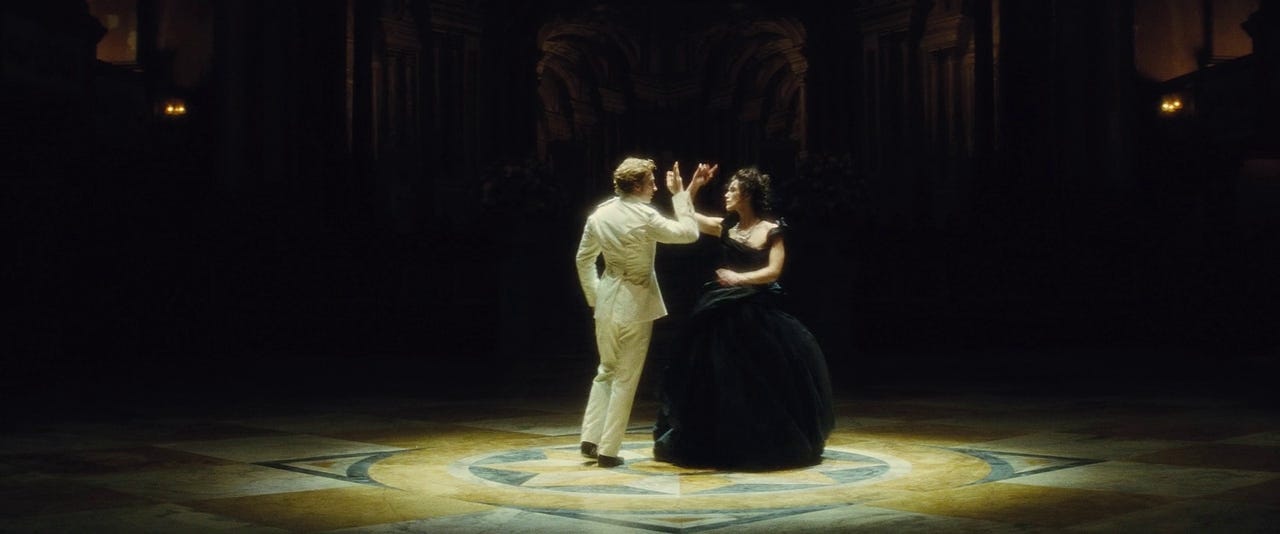
So I recognize that I sacrifice nothing by advocating for marriage because I love my marriage, but if Oblonsky were a more virtuous man, he would sacrifice his petty lusts for other women to care for his wife and children. And yet in my celebration of commitment, and Oblonsky’s advocacy for freedom, it helps to interrogate what certain moral structures are for, rather than enforce them haphazardly.
For example, one purpose of marriage is to protect the vulnerability of children and the spouses. If a marriage however becomes its opposite – in the case of an abusive father – a strict emphasis on commitment can become a vulnerable victim’s prison. The marriage if held to an ideal beyond reproach, becomes a vehicle for the opposite of its intended goal.
So I realize that when we advocate for moral clarity, we can easily excuse the collateral damage that arises as a result. And while some sacrifice is justified and necessary, like the sacrifice of a parent for the wellbeing of their child, some sacrifice is antithetical to human flourishing, like the sacrifice of an abused wife to the ideal of marriage. And to hope for a world that is not dominated by the evils of polarization, we must acknowledge that. For us to lock up violent criminals, we must run the risk of some wrongful convictions. For us to protect women and children through marriage, we run the risk of abuse being tolerated. For large-scale justice to be enacted, there is the uncomfortable possibility of opposing injustice left in its wake.
Two scenes – which elicits your empathy, and which do you prefer to ignore or attempt to deny? Whose life is more inconvenient to you?
An American teenager is killed by a violent criminal who crossed the border illegally under lax immigration laws.
A young woman fleeing gang violence in her home country attempts to cross the border, but is caught and deported, and then murdered by said gang.
So if you believe in something, especially strongly, see if you can hold a pocket of space for the other, lest you become a fervent ideologue, blinded by your own righteousness, ignorant to the suffering of those whose circumstances inconvenience your truths.
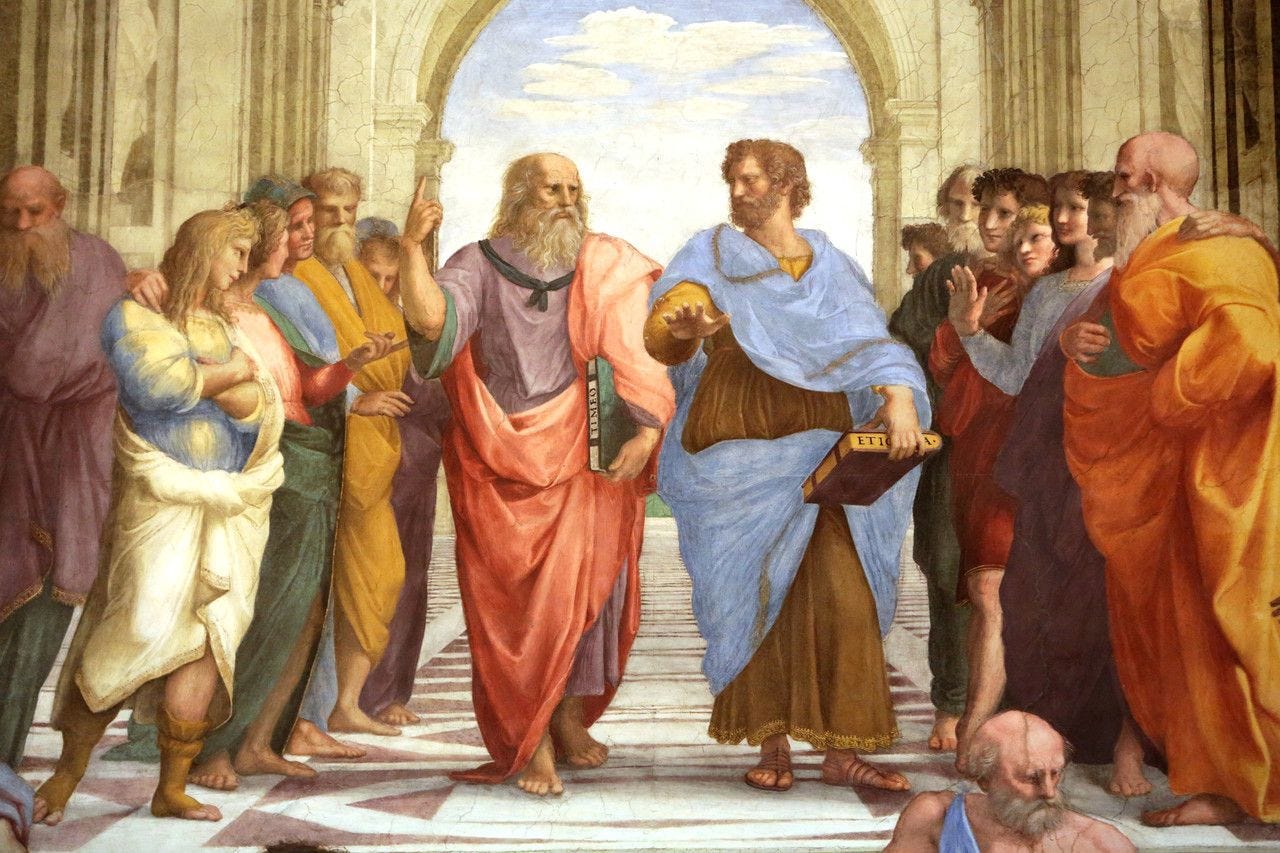
In Plato’s Republic, an unjust city is one of winners and losers, where people are divided against each other and one person’s gain is another’s loss. In a just city it is quite the opposite. Everyone’s roles harmonize, and harm to one harms the whole. Plato’s solution to injustice is sneaky though. He argues that philosophers alone possess the knowledge and virtue required to lead, and should therefore rule on behalf of everyone else.
Unfortunately, it is all too common for elites to believe that they possess perfect knowledge and virtue, appointing themselves as godsends, often to the detriment of the people they claim to help. Even when the desire for good is earnest, harmful luxury beliefs proliferate, unbeknownst to the protected classes who impose them upon the less fortunate.
The road to hell is paved with good intentions, and the temptation to view oneself as omniscient looms large within those intentions.
We will never live in a perfect world without pain or injustice, and most attempts to create utopia end in a form of dystopia. So I will refrain from creating some blanket statement that will solve injustice once and for all because I see that as impossible.
However, I will turn my attention inwards, and attempt however imperfectly to be honest with myself. I know I am tempted to think of myself like God, all-knowing and possessed of perfect judgment. My opinions become wholly good by default, and anyone who disagrees is wholly deranged. So all I can do is occasionally inject myself with a dose of humility, a nuanced and unsatisfactory non-conclusiveness in order to build an uncomfortable bridge of peace within myself and with others. That’s all I can control.
And perhaps if I am to stand firm in something, it is that by wrestling with these matters, I prove myself to be not an ape, but uncomfortably human.