

Gender, Ideologies, and Bodies
A search for the true meaning of woman

Sameness and Difference
Are men and women really so different from one another? Are the differences negligible? Is gender a social construct? What about pregnancy? (I’m joking)
For most of my life, I’ve been fascinated with gender1, simply because I’ve been curious about myself, and why I am the way that I am.
In my younger years, all of my role models were men. Jacques Cousteau, Jeff Buckley, Jack Kerouac, John Lennon (the J names might be a coincidence) were some of my favorites. I didn’t think much about their maleness being something distinct from my femaleness in my admiration. I just saw them as people I liked who happened to be men.


I am not a man. I will never be a man, and I have no idea what it feels like to be a man, though I admit I was curious. I envied their physical strength, the simplicity of their bodies, and their ability to move freely without fear of sexual harassment. Emotionally I related more to calm stoicism than empathetic expressiveness. Again, everyone I looked up to personally and artistically, were men. I often found myself more at ease in friendships with men.
Though I never rejected my femaleness moreso than the culture encouraged me to, my reasons for enjoying my femininity were quite reductive and superficial. I liked makeup, clothes, being playful, and behaving “girly.”
My distinctness as a girl apart from boys was rarely emphasized. If it was, it was only to proclaim that girls were better than boys. I even had a t-shirt that said “girls rule, boys drool,” which I’d happily repeat as a taunt. Girls were smarter, prettier, and more mature. Duh…..
One day in 8th grade health class, the boys and girls were separated to watch films describing our respective puberties. For some reason still unbeknownst to me, us girls watched the films about both male and female puberty, but the boys only saw the one about male puberty. I was thoroughly disgusted by both. My only question to the teacher afterwards was if I really had to go through with all of this. When she said yes, I was crushed. Somehow I had held out hope that it was optional. I returned to class with the unseemly knowledge of what wet dreams are, while I knew all the boys were blissfully unaware of the treacherous landscape of periods. How unfair.
In 8th grade there was also a push by the teachers for girls to stop wearing leggings as pants and tanks tops to school. No dress code restrictions were placed on the boys. I suppose this was the first time I had feelings that could be described as feminist because I became aware of a double standard between us. Why were female bodies “distracting” while male bodies were not? Nobody could give me a straight answer. Though I intuited enough from watching boys ogle my large-chested friends.
When we learned about the past in relation to women’s experiences, it was always framed through how evil our male ancestors supposedly were, and how miserable it was to be a woman until fairly recently. It would have been taboo to think critically about any of this, to weigh the pros and cons of a society where everyone is treated “the same.” Taboo to even examine what differentiates the sexes so profoundly that every culture in human history developed distinct roles and initiation ceremonies for them.
If we are essentially the same, why is there so much demarcation between the sexes cross-culturally and across times? The doctrine of separate but equal when it came to race was an atrocity, and some cross-cultural traditions like human sacrifice and slavery are abominable. But the reason racial discrimination is unjust is because race is a non-scientific fiction, while sexual difference is infused into every aspect of our bodies.
So if justice has to do with weighing accounts of sameness and difference and acting accordingly, what is justice when it comes to men and women? For example, it would be unjust to treat a child like an adult in certain ways, but it would also be unjust to treat a child like a dog. We are the same in that children and adults are both human, but different in essence due to stage of development. And since men and women are the same when it comes to factors like personhood, intelligence, moral responsibility, and dignity – it would be unjust to discriminate along those lines. However, when it comes to things like physical strength, vulnerability, sexuality, reproductive capabilities, size, and personality trait averages, the differences are real. This is why we have things like separate sports leagues, bathrooms, and clothing. So in certain ways a cultural narrative of sameness is just, and in other ways it isn’t. Therefore, nature and rationality should be our guides.
Cultural Definitions
In my family, like most families I knew during my childhood, the dads were the breadwinners, and the moms took charge of the homes, kids, and community organizing. In many ways I took the female presence for granted, and in other ways I found it shameful that my own mother didn’t prioritize a career over taking care of me and the home. I told myself I would never be like her or the others. They were holdovers from a more primitive time. I was a part of the enlightened generation. All that mattered to us was career success, self-fulfillment, and autonomy.
Looking towards the culture to teach me about my womanhood was a recipe in confusion and disaster. I was hardly taught anything directly, but as young people we infer so much through subtext. We inferred that women were basically the same as men, except for our pesky periods, that we got to play around with clothes and makeup, and that we experienced sexism, while men did not.
Popular shows like Sex and the City taught us that sexual freedom was an ultimate good to aspire to, and that family and marriage were for those “other,” simple-minded women. Memorable in this regard is S1E10, when the four leads are invited to an old friend’s baby shower. All but Charlotte drag their feet to the event, forget to bring gifts, and treat the other mothers there with contempt. The portrayal of the mothers is abysmal: they behave like idiotic breeding cows who speak only in baby talk and rarely think beyond superficialities like cute baby clothes.
Carrie, the lead, draws a stark dichotomy between sex and motherhood: their pregnant friend once found any excuse to take her top off, but she and the other mothers appear as unattractive, unsexual beings, having relinquished every part of themselves to create new life – an act the four women (or should I say girls) find to be without merit. In the same episode, Carrie panics because her period is late and she thinks she might be pregnant. The irony, of course, is that pregnancy is a natural consequence of sex, and fertility is a sign of a healthy body, yet the show portrays them as mutually exclusive. The babies might as well have been brought by the stork.
It’s also telling that throughout the whole show, none of the leads are ever shown with a relationship to their own parents or siblings. Were they created as fully grown adults, plopped into the middle of Manhattan? They have no attachments, no history, no childhood. They are purely consumers of designer clothes and sexual experiences.
From media like this I absorbed my only sexual ethic: sex is always good, and you should do it as much as possible, with as many attractive people as possible. Unfortunately, or fortunately, in the real world my body and spirit rebelled against this toxic hedonism. While my friends were off presumably enjoying casual flings,2 I thought there was something genuinely wrong with me for being terrified at the prospect. In my bones, I knew that sex was the most intimate thing you could do with another person, one that you should deeply know and love – but another side of me embraced the values handed down to me, even though I didn’t enact them myself. I felt myself to be the problem since so many of my friends seemed to live out these principles without fear or doubt.
An evolution in my understanding occurred when I took a human sexuality class in college. Our teacher was a brilliant man. What I especially appreciated about him was that he never hinted at what his own beliefs were. He engaged our critical thinking skills by having us debate things like the custom of women adopting their husband’s surnames, the evolutionary origin of the female orgasm (shockingly controversial), what human sexual dimorphism should dictate about sexual morality, and the ethics of non-monogamy and pornography. One day we even had a porn star come in as a guest speaker. I never felt like our teacher was pushing an agenda on us, however, he did teach us extensively about evolutionary theory in regards to sexual differences between males and females. While I didn’t get any answers as to why I am a woman, predatory male behavior, mating choices, and behavioral differences in men and women at large started to make more sense to me as way of a partial explanation. It was more of a “how” than a “why” though.
The Interior Culture War
After college, from my early 20s to my late 20s, I experienced a large, painful, shift in my inner world. I imbued my cultural narrative full on, unaware that it was taking me down the road of self-destruction.
This began at work, where I rarely felt like I was treated differently for being a woman. If I was, it was usually better3. I noticed that my male colleagues were chastised more harshly than me for similar mistakes. Yet, I complained bitterly about my period, never thought about motherhood positively, and pushed my body beyond her limits to achieve more. I considered my worth to be intimately tied with how well I did in my career, which was really a measure of how well I could please my superiors.
After a brief but harrowing experience on birth control,4 my period vanished for months at a time. While “convenient,” it was concerning, and sent me down a rabbit hole of trying to find out the cause, but no doctor was ever able to identity one. My body was rebelling against everything I put her through, and I hated her for it.
I went through months of uncontrollable weeping followed by painful suicidality. I felt out of control, and powerless to change anything. Everything in myself was marked by self-rejection. I didn’t see the point in being alive, but still felt enslaved to a path that was killing me from the inside.
A dark night of the soul is purification by fire.
Soon enough the culture wars began their treacherous descent into the world of gender. A word with a different meaning depending on who you asked. The question “what is a woman?” Got tossed around as a political bludgeon. Nobody ever asked what a man was. Should I have found that strange? Somehow I didn’t.
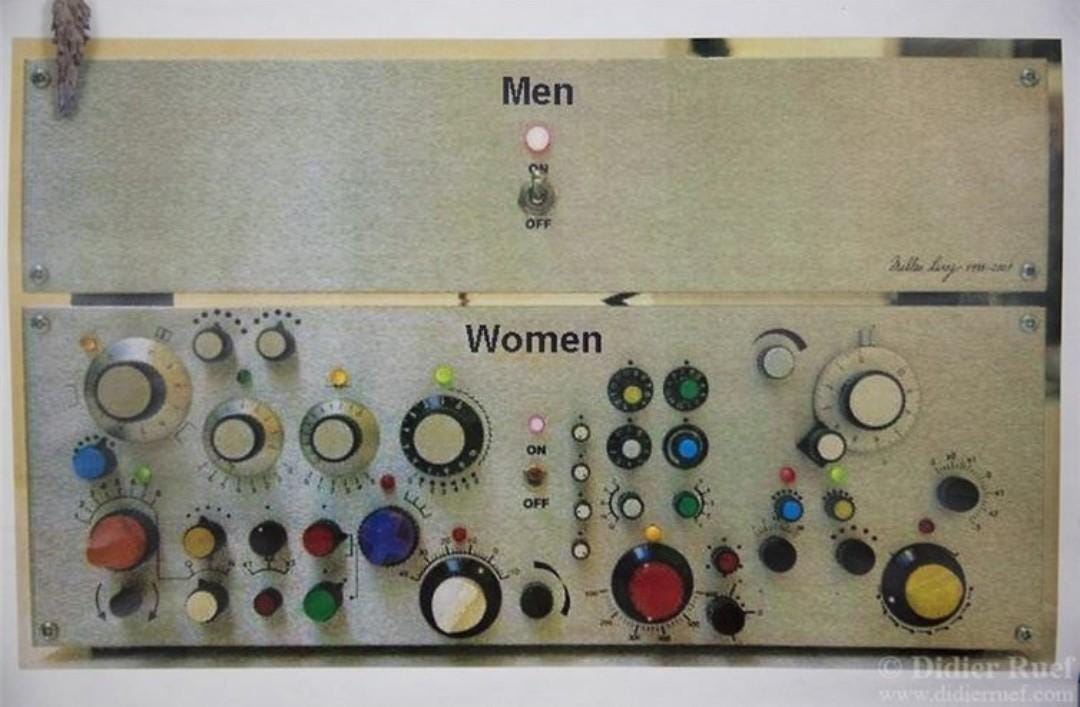
You fit into either one of two camps: either a woman is a person with two XX chromosomes and a vagina, or a woman is an inner feeling, a vibe, whatever you want it to be. Both options I found uninspiring, and ultimately degrading. But the question still stuck in my mind.
Around this time I began experiencing new anxieties about my body. Every flash of pain, skipped heartbeat, and strange sensation became evidence of a fatal disorder. Some days were torture. The worst was when I was afraid to fall asleep, certain I would die in the night of some unknown cause. Healthy blood tests and doctors’ visits were only so reassuring. I hardly trust most doctors as it is. They pave over complex issues with drugs, focus on disease over prevention, pills over nutrition. If they couldn’t get basic facts about health right, how could I trust them with my own?
The sheer terror of it all suddenly dawned on me. I am trapped in my body. Death is the only way out. And death either comes through painful disease, or bodily violence. Suffering is inevitable, and is my only way out of this bodily madness. What a curse!
Gnosticism, one of the first major (and enduring) Christian heresies taught that matter was evil, and the body is a prison for the spirit. We are trapped in a world of suffering due to the frailty of our bodies, but the soul, the divine spark within, sits waiting to be released upon death. In response to this dogma, ancient cultists adopted one of two extremes – asceticism and abstinence or extreme libertinism which included engaging in all sorts of promiscuous and hedonistic behavior in order to degrade the body, sign of evil that it is. Both groups believed bringing new life into this world was an abomination, as it meant condemning another soul to material imprisonment.
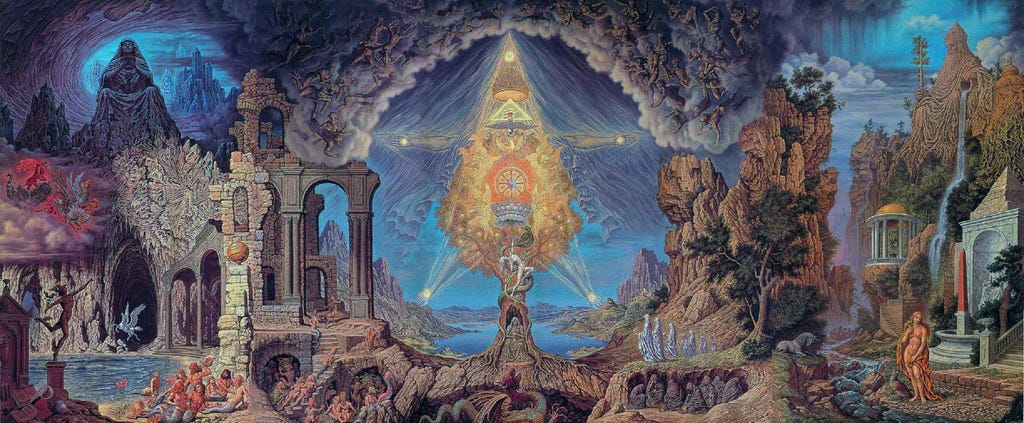
My weak mortified flesh and my pure mind and soul, understood the impulse to find a way out of this suffering. But while I relate to the deep hurt behind the gnostic impulse, I was never tempted by it. By now, I knew enough to know that self-rejection and denial would only amplify my suffering as it had done to me before. If there was a way out, it wouldn't be found in escaping my body, but in understanding what it meant.
No Neutral Humans
Sometimes I would ask my husband what it felt like to be a man, and he would gently laugh at my line of childlike questioning. He had no idea how to respond. It was all he knew. But wasn’t it great to be able to go for runs without breasts painfully bouncing in your shirt? Didn’t it feel freeing to have such powerful upper body strength and stamina, and to not have to deal with an ever-shifting complex hormonal landscape? Of course he couldn’t compare his experience to mine. It was silly to try. We would never know. Our sexed, bodily experiences are an unbridgeable divide. We are both the same in a sense, fully human, fully emotional and feeling beings, yet we are different in this mysterious way. What does it mean?5
Is the reason I was born a woman so that I could reproduce sexually, creating offspring to pass along my genes? Not fully satisfying either. That makes me no different than a female fruit fly or a rat. Though we share plenty in common with animals, especially mammals, we are also quite an order different. Another type of mammal will never read these words, ponder the meaning of her sexed body, or even feel the need to control or deny any of her sexual impulses, or reproductive capabilities. Again, I found that when sexual difference is simply described in bodily terms, it quickly begins to feel vulgar and insufficient.
Perhaps I should return to the other definition. Womanhood is a feeling, an inner knowing or essence that one is a woman. But what is the meaning of that inner knowing if it is detached from the physical distinction of the female body? What does woman even mean? I suppose it becomes a form of demeanor, physical appearance, fashion choices – all things that I felt made me a girl when I was child, prior to puberty, when knowledge of my sexed body still lay dormant.
There was a a beauty to this other definition though. When detached from clumsy descriptions of a “person with a vagina and boobs” that felt dehumanizing, womanhood as an inner experience went deeper. It was irreducible to body parts. In fact, it felt important to see womanhood as something profound, a spiritual category of person.


Of course! The mystery dividing man and woman is not just physical, but experiential, mysterious on the level of the origin of the universe, or the question as to why life exists at all.
Is the fact of our sexual difference a sign from God? An indication of our powerlessness in that we must come together to create new life unlike Him who creates all of life alone?
The separation between the male and female experience seems so wild, so unbridgeable – but then I think of the fact that a woman can give birth to a boy or a girl. Those possibilities are equal. Yet while not all women are mothers, all mothers are women, and no man can bridge that divide.
As I meditate on the mysteries of manhood from my female perspective, I must contend with my own identity, and the differences I was explicitly taught or made to ignore through a culture of sameness. My body is not neutral, neutered, or negligible. Nobody’s is. There is no template for a neutral human. None exists.
A Mother’s Love
French philosopher and feminist activist Simone de Beauvoir saw motherhood as the last great hurdle for women to overcome towards equality.6 Much like Aristotle in his time,7 she sets up man as the ideal or “neutral” human, and every way in which women differ she finds to be a failure. While women often were the bearers of great injustices, her answer is to go further down the path of self-rejection. It is like someone who has been starved her whole life advocating for anorexia.
De Beauvoir emerged from a time and family where gender was so rigidly defined that even intellectual life was considered “manly;” her father told her she had a “man’s mind” due to her intellectual prowess. But rather than rebel against this false dichotomy, she burrowed deeper into it, turning her critique not on the standard itself but on the woman’s sphere .
De Beauvoir saw motherhood as trapping women from transcendence, and women’s biological realities as excuses used to confine them to the damaging social institution of family life. Her vision of liberation was therefore that women must shed their physical, maternal, and societal particularities to pursue what she saw as a higher, inherently male, form of existence. In doing so she ignores the more fundamental truth: that man and woman are not competing definitions of humanity but two halves of a single whole, each intelligible only in relation to the other. To liberate women by masculinizing them does not free them — it obliterates the category of their sex, and locks them into a false paradigm of self-denial.


A contemporary of De Beauvoir, Gertrude von Le Fort, wrote of womanhood and motherhood quite differently. While never an earthly mother herself like De Beauvoir, she called for all women to embrace a spiritual posture of motherhood, which they could express in the professional, home, and relational spheres.
“The past epoch require a profession for the unmarried woman as a substitution for motherhood. The future, inspired by a concept of spiritual maternity will call for it, but from the fulsome motherliness that is also in single women. The professions for women will consequently not be the substitute for a failing motherhood, but rather the working out of the never failing motherliness that is in every genuine woman.”–Gertrude von Le Fort8
The modern or post-modern woman might read that passage and flinch at the application of motherhood onto every woman, whether or not she actually has children. But I would argue that very reaction is indicative of an anti-woman worldview, one inculcated by thinkers like De Beauvoir, who so devalued motherhood that any feminine association with it is automatically labeled oppressive or regressive, even if that association is purely spiritual.9 In critiquing the cultural attitudes towards women in her time, she embodied those very attitudes by denying the meaning of her own body in its fullness.
Yet with great power comes great responsibility, and motherhood is incredibly powerful. In the Harry Potter series, a mother’s love is portrayed as the most powerful force on the planet – powerful enough to defeat death itself. I never batted an eye at this kind of “magic,” because truly, is there anything more death-defying, ferocious, or healing than the pure love of a mother?

None of us would exist without this most primal and first order of relationships. So I ask myself, what curse was put upon our society that motherhood - and moreso associating women with motherhood is treated like a grave sin?
And what did Le Fort mean by a “motherliness that is in every genuine woman?” Because in this statement she includes women who are not literal mothers, but she also does not deny physical motherhood either.
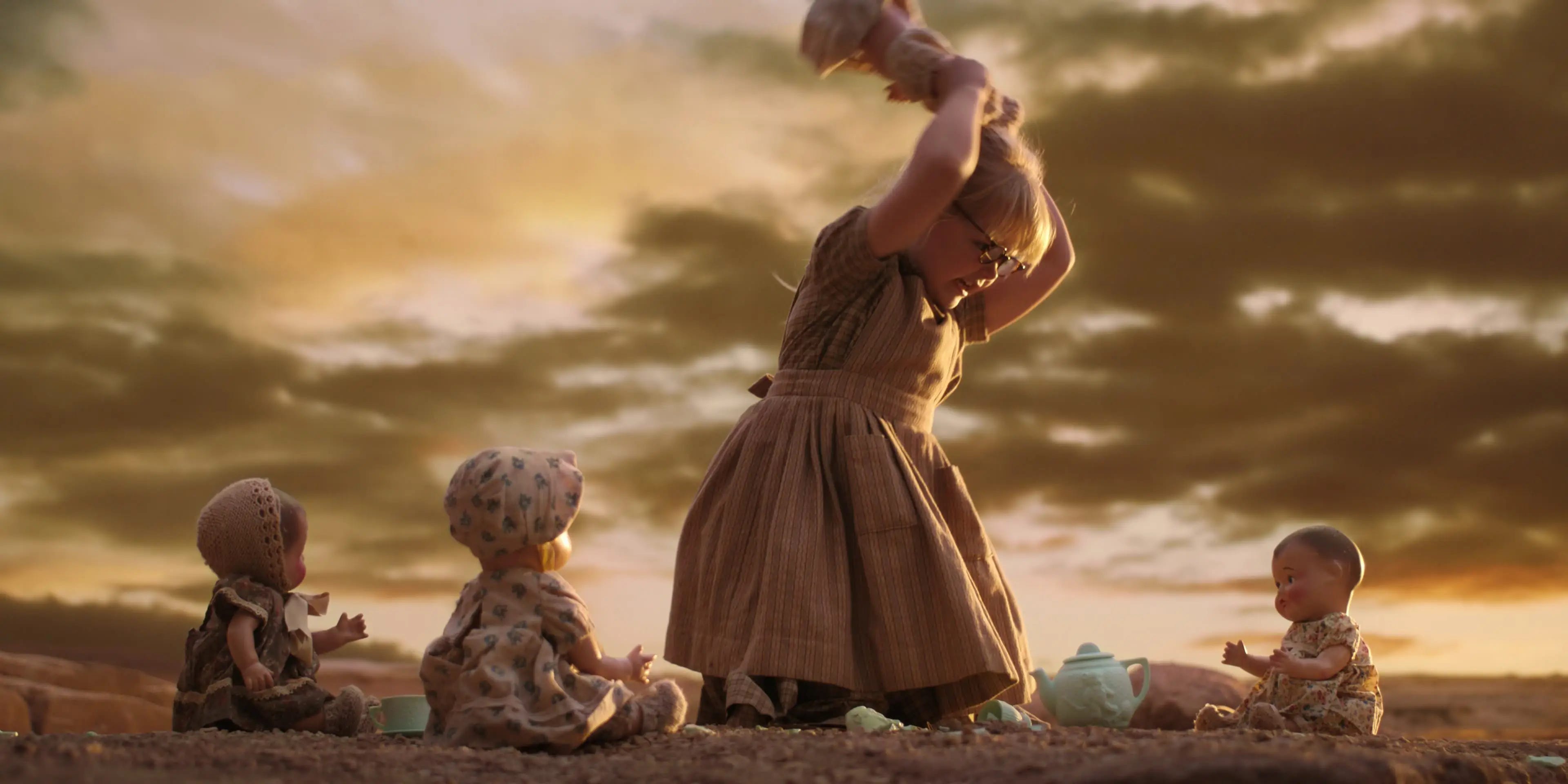
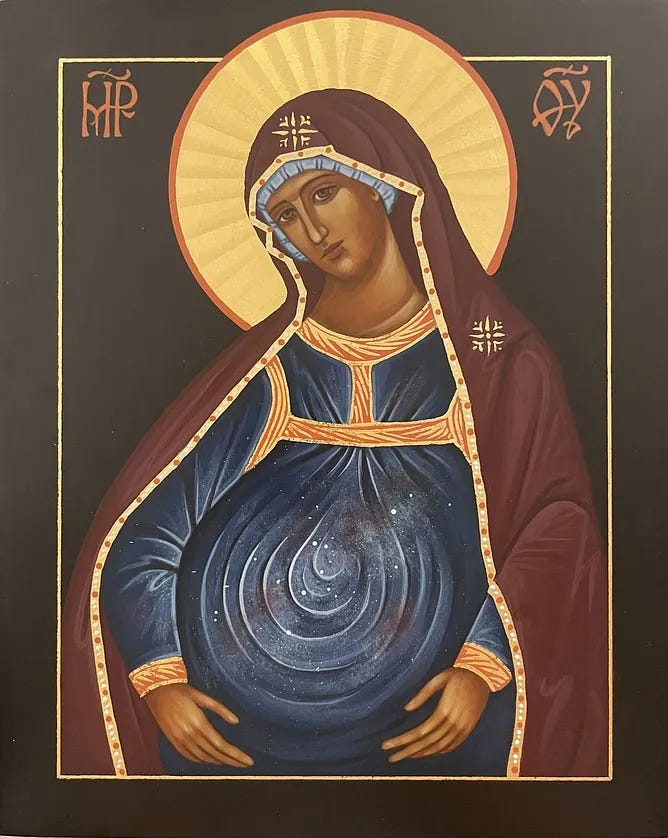
We all exist as an icon of a mother’s love. Each of us is direct physical evidence of the fact that we were once a helpless infant in our mother’s womb, fed milk in order to survive, cared for in every possible way during our most vulnerable years. We were totally defenseless and completely dependent on love, despite not being “worthy” in any direct way, having accomplished nothing, owning nothing, thinking or believing in nothing, except for our desperate and essential need for unconditional LOVE.
So while each male and female is proof as the recipient of this love, only the woman herself can represent both bodily and spiritually, the giver of this most sacred love – the love of life itself.
Valuation of the uniquely female therefore is a rally against cruel utilitarianism, selfish individualism, and indifference to the suffering of the lowly among us. It is impractical in the most beautiful and intimate sense, yet pragmatic in the generational, eternal sense.
In ancient cultures and traditional religions, women are marked as the gatekeepers not only of birth, but also of death. When Catholics ask Mother Mary to “pray for us now and at the hour of our deaths,” they invoke the Mother of Life to intercede on their transition into the next one. Historically, women served as both midwife and death attendant, presiding over the body and soul at both ends of life, and engaged in ritual mourning. As birth marks the arrival of a new soul with no ownership or achievement, death marks the release of all ownership and achievement. While men fight wars, conquer, hunt, and procure, women remind us of the true worth of a human soul irrespective of anything else other than his or her existence.
“The sacrifice that women make, especially in relationship to infants is pretty obvious and should be celebrated, which is why the image of the Divine Mother and the infant is a sacred image, and any society that doesn’t hold that as sacred is off the rails in some fundamental manner” - Jordan Peterson10
When we denigrate motherhood both physically and symbolically, we do so at our collective peril. For teaching women to reject the gift of unadulterated love within us that is concretized through a motherhood embedded in all of us as infants and re-experienced anew by some of us as literal mothers, we denigrate the human person as a whole. Physical strength, wealth, power, and reputation become arbiters of human value, rather than the naked fact of personhood.
As women, we bear the full weight of this denigration when our physical differences from men are interpreted as deficiencies, when our vulnerability in pregnancy is treated as a flaw, when our particular bodily realities are denied, or when the very definition of woman is called into question. We fall apart. We forget who we are and why we are here: not to conquer, but to love.
Maybe that is my why.
Thank you to McKinley Czop whose work helped inspire some of the thinking in this piece.
Or sex depending on your terminology of choice. For an etymology of the word gender, here is a neat reference: https://www.etymonline.com/word/gender
In the end, full of more drama and trauma than actual joy or fulfillment.
I had a man tell me once he wouldn’t have hired me if I were a man.
Of which I was confidently told by my idiot gynecologist that there are zero possible side effects to taking it. Sadly, an all too common experience.
I actually asked him again while I was writing this piece, and he thought about it more deeply before responding with “Being a man means you have to come to terms with death more immediately. It means that I would die in order to protect you. If I needed to go to war for you I would. If there was an intruder, I would attack him. So there’s an understanding that I would need to be okay with death at any moment. I asked, “does it make me a coward that my impulse would be to hide in the closet if someone broke in?” He said, “no that’s what you should do.” It goes without saying, but I love this man.
Beauvoir, Simone de. 1949. The Second Sex.
Aristotle’s view on women as being a deformed version of men: “The female is, as it were, a mutilated male, and the catamenia are semen, only not pure; for there is only one thing they have not in them, the principle of soul.” – On the Generation of Animals” (Book II, Chapter 3)
Von le Fort, G. (2010). The eternal woman: The timeless meaning of the feminine (M. C. Buehrle, Trans.). Ignatius Press. (Original work published 1934).
You could also replace everything in this sentiment with the word “man” and “father,” and it would also work. However, motherhood is iconic (quite literally) in a way fatherhood isn’t since it often looks the same across all times and cultures in a way that fatherhood doesn’t.
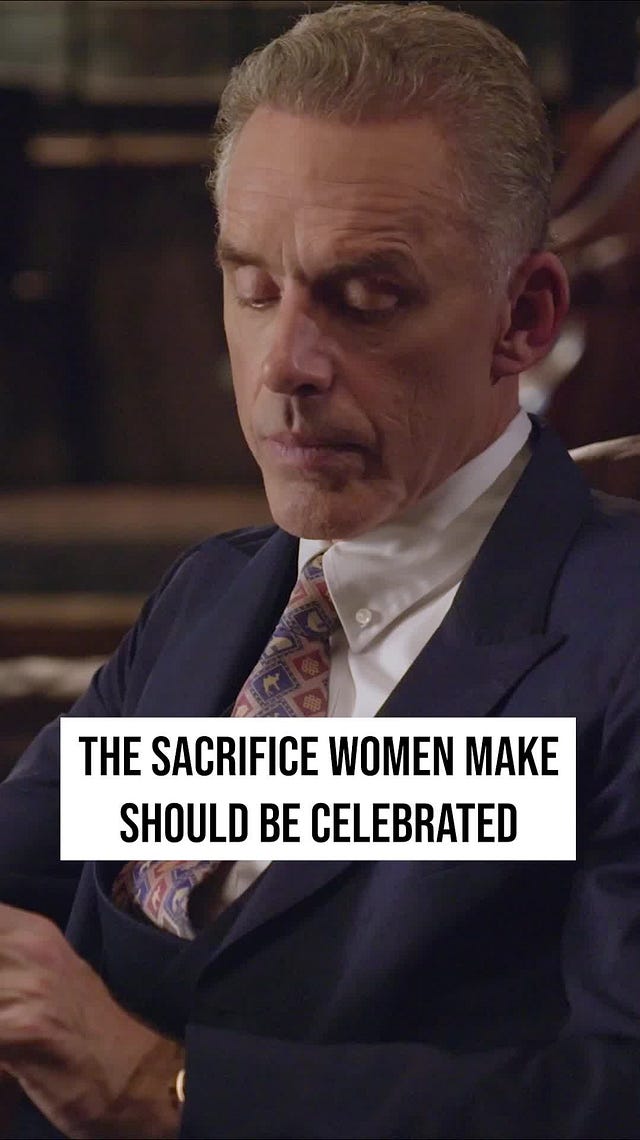
 Tiktok failed to load.
Enable 3rd party cookies or use another browser